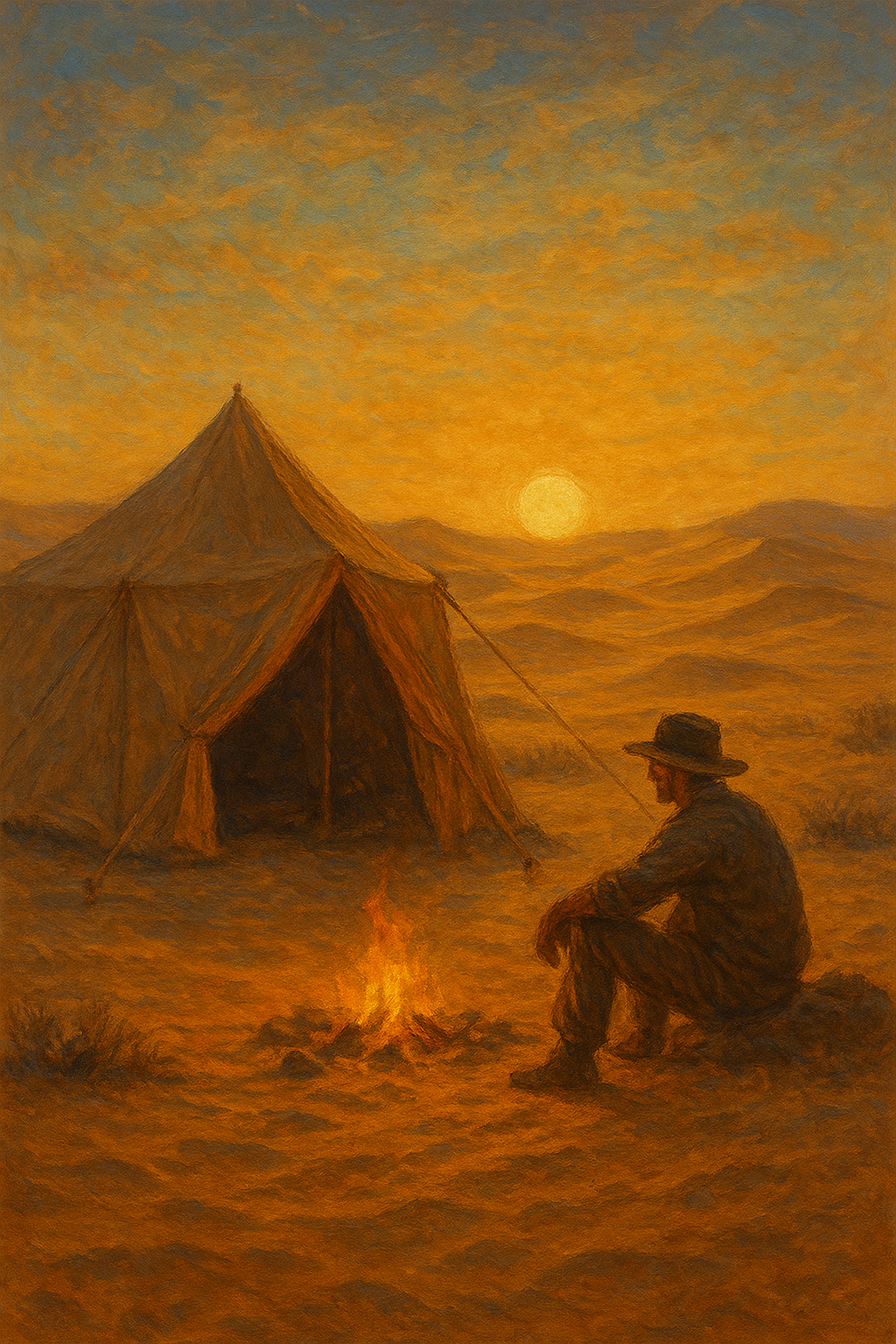
Desert camping means spending the night in arid, sandy, or rocky desert environments. It’s all about embracing vast open spaces, incredible starry skies, and the unique stillness of the desert.
🌡️ What to Expect
- Temperature swings: Days can be scorching hot (think 90°F+ / 30°C+), but nights get cold, sometimes dropping below freezing.
- Dry air: Humidity is very low — keep hydrated!
- Wildlife: Expect critters like scorpions, snakes, lizards, and nocturnal animals.
- Limited shade & water: Bring plenty of water and sun protection.
🏕️ Essential Gear
- Tent: Lightweight and well-ventilated, with good stakes for sandy/rocky soil.
- Sleeping bag: Choose one rated for cool to cold nights.
- Sun protection: Wide-brim hat, sunglasses, sunscreen, and breathable clothes.
- Water: At least 1 gallon (4 liters) per person per day.
- Lighting: Headlamps or lanterns (extra batteries).
- Navigation tools: GPS, compass, or maps — desert terrain can be tricky.
- First aid kit: Always a must.
🍳 Food & Cooking
- Opt for easy, non-perishable food — dried fruits, nuts, energy bars, canned goods.
- Use portable stoves designed for outdoor use.
- Always clean up — desert ecosystems are fragile.
🌌 Highlights of Desert Camping
- Star gazing: Minimal light pollution means breathtaking views of the Milky Way.
- Sunrises and sunsets: Stunning colors lighting up the dunes or rocky formations.
- Peace and quiet: Pure silence with just the sound of wind and wildlife.
🔥 Safety Tips
- Tell someone your itinerary.
- Be aware of weather forecasts — desert storms can hit fast.
- Watch your footing to avoid snakes or scorpions.
- Avoid camping in dry riverbeds (flash flood risk).


