Mountains don’t speak. They don’t move. They don’t invite.
And yet, they have drawn humankind for centuries — not just to admire, but to conquer, to climb, to understand.
Mountaineering and climbing aren’t just sports. They’re a calling. An art form that blends courage, endurance, and a strange kind of love for pain. Because when you’re hanging by a rope hundreds of feet above the ground, or taking a final step on a snow-laden ridge gasping for breath, you’re closer to something pure — and undeniably real.
Mountaineering vs Climbing – What’s the Difference?
While often used interchangeably, they’re not quite the same:
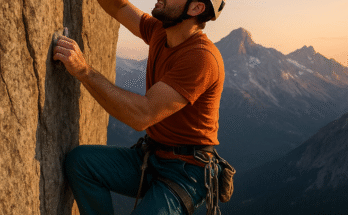
- Climbing usually refers to rock climbing (indoor or outdoor) or ice climbing — where the challenge is steepness, grip, and technical skill.
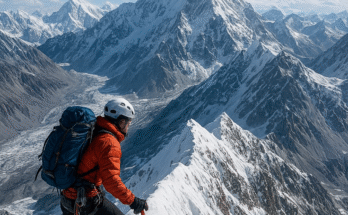
- Mountaineering is broader — combining climbing, hiking, snow travel, glacier crossings, and high-altitude survival. It’s the complete mountain experience, often over several days or weeks.
Think of it this way: every mountaineer is a climber, but not every climber is a mountaineer.
Why Do People Climb Mountains?
Some say, “Because it’s there.” But it’s more than that.
- To test limits — both mental and physical
- To experience nature in its rawest, most unforgiving form
- To find silence in a noisy world
- To stand on a summit and feel earned peace
- To confront fear — and push through it
Mountaineering is not a vacation. It’s a transformation.
Iconic Mountaineering Destinations
- Mount Everest (Nepal/Tibet)
The ultimate summit. Not the hardest climb technically, but the most iconic — and unforgiving. - The Alps (France, Switzerland, Italy)
Birthplace of modern mountaineering. Mont Blanc, Matterhorn, Eiger — legends live here. - Denali (Alaska, USA)
North America’s highest peak. Brutal weather, remote location, and raw beauty. - Aconcagua (Argentina)
The highest mountain outside of Asia. A high-altitude challenge that doesn’t require technical climbing but tests endurance. - Himalayan Peaks (India)
Shivling, Kamet, Nanda Devi, and the lesser-known peaks offer world-class climbing without Everest’s crowds.
Climbing Styles: From Boulders to Big Walls
- Bouldering: No ropes, short climbs, maximum power. Pure movement.
- Sport Climbing: Fixed bolts and routes. Fast, technical, and thrilling.
- Traditional (Trad) Climbing: You place your own gear. Mental chess on the wall.
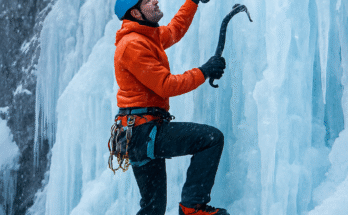
- Ice Climbing: Frozen waterfalls. Axes. Crampons. Precision and power.
- Alpine Climbing: Big peaks, mixed terrain, harsh weather. For the bold-hearted.
What Mountaineering Teaches You
- Discipline: Every step counts. Every mistake teaches.
- Teamwork: You trust your rope partner with your life.
- Minimalism: You carry only what’s needed — and realize how little that is.
- Resilience: You fall. You fail. You come back stronger.
Safety is Not Optional
Mountains are beautiful, but they’re not forgiving.
Here’s what climbers must respect:
- Weather: It changes fast. Always be prepared to turn back.
- Altitude sickness: Acclimatize slowly. No summit is worth your life.
- Training: Physical fitness and technical skills are essential.
- Gear: Helmets, ropes, harnesses, ice axes — your life depends on them.
- Leave no trace: Take your trash and your ego back down with you.
Final Thoughts – You Don’t Conquer Mountains
You can’t conquer a mountain. You borrow a moment on its summit, if it allows.
Mountaineering isn’t about pride — it’s about humility. The mountain always wins if you’re careless. But if you listen, respect, and prepare… it might just let you pass