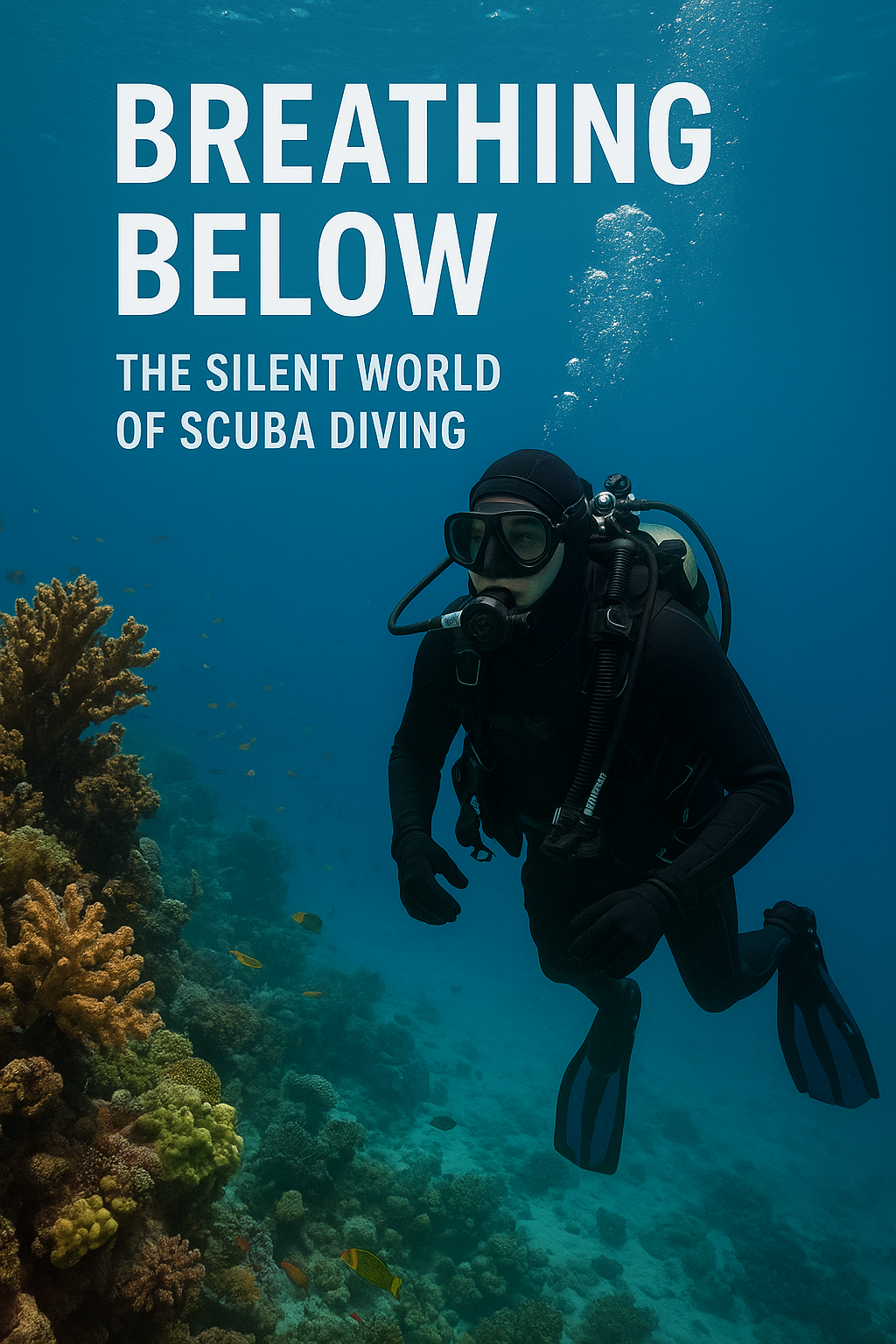
It starts with a single breath.
You descend slowly, watching sunlight filter through blue. A school of fish swirls past. A coral reef rises like a living city beneath you. For the first time, you’re not a visitor on the surface—you’re part of the ocean itself.
Scuba diving isn’t just an adventure. It’s an entry into another world.
What Is Scuba Diving?
SCUBA stands for Self-Contained Underwater Breathing Apparatus — a system that allows you to breathe underwater using compressed air in a tank, while exploring the depths of oceans, seas, lakes, or even shipwrecks.
Unlike snorkeling, scuba diving lets you go deeper, stay longer, and experience more. From colorful reefs to mysterious wrecks and deep drop-offs, the underwater world is more alien—and more beautiful—than anything above it.
Why Scuba Dive?
- To witness life beneath the surface, untouched and surreal
- To feel weightless and peaceful—like floating in space
- To experience adventure and serenity at the same time
- To discover that the ocean isn’t silent—it speaks in bubbles, currents, and color
Whether you’re drifting alongside a sea turtle, hovering over a coral reef, or exploring a sunken ship, diving gives you a new perspective on the planet—and your place in it.
Top Scuba Diving Destinations Around the World
🌊 Great Barrier Reef, Australia
- The largest coral reef system on Earth
- Over 1,500 fish species, manta rays, reef sharks, and vivid coral gardens
🌊 Andaman & Nicobar Islands, India
- Crystal-clear waters, rich marine biodiversity
- Sites like Havelock, Neil Island, and Barren Island (volcanic diving!)
🌊 Red Sea, Egypt
- Warm waters, colorful reefs, and iconic wreck dives like the SS Thistlegorm
- Excellent visibility and abundant marine life
🌊 Raja Ampat, Indonesia
- The most biodiverse marine ecosystem on Earth
- Remote, pristine, and perfect for advanced divers
🌊 Belize Barrier Reef
- Blue Hole dive—iconic deep wall surrounded by stalactites
- Calm, warm waters with plenty of reef sharks and turtles
What Do You Need to Start Scuba Diving?
If you’re new, you’ll need a certification—usually a PADI Open Water Diver or equivalent. You can get certified in 3–5 days with a mix of theory, pool training, and open water dives.
Once certified, the basic gear includes:
- Wetsuit or dive skin
- BCD (Buoyancy Control Device)
- Regulator & tank
- Mask, fins, snorkel
- Dive computer or depth gauge
Many dive centers provide rental gear, so you don’t need to own everything to start.
Types of Scuba Diving
- Reef Diving – Explore vibrant coral ecosystems
- Wreck Diving – Dive into sunken ships and artificial reefs
- Night Diving – Experience the ocean’s nocturnal life under torchlight
- Drift Diving – Let the current guide your dive
- Cave Diving (for advanced divers) – Navigate submerged cave systems
- Deep Diving – Go beyond 18 meters to see what lies below
Safety & Tips
- Never dive alone – always go with a buddy
- Equalize pressure frequently during descent
- Check your air often and ascend slowly
- Respect marine life – never touch coral or animals
- Get certified through a reputable agency (PADI, SSI, NAUI, etc.)
Most importantly: never hold your breath underwater.
What You’ll Feel Below
- Calm – The silence is total. Your breath is your rhythm.
- Awe – Every dive reveals new creatures, colors, and textures
- Freedom – Floating weightlessly, unbothered by gravity or noise
- Connection – To nature, to the planet, and to your own breath
Many divers describe their first real dive as a life-changing experience. The world you thought you knew suddenly becomes much bigger—and much deeper.
Final Thoughts: The Ocean Is Calling
Scuba diving is not about escaping the world—it’s about discovering a new one.
Beneath the surface lies a realm that’s silent, strange, and full of wonder. You’ll come for the adventure, but you’ll stay for the peace.