There’s climbing — and then there’s ice climbing. Where every swing of your axe sinks into frozen waterfalls. Every step crunches into vertical walls of snow and crystal. Where your breath hangs in the air like mist, and the only thing louder than your heartbeat is the crackle of ancient ice.
This is not your average outdoor hobby.
Ice climbing is cold, calculated courage.
What Is Ice Climbing?
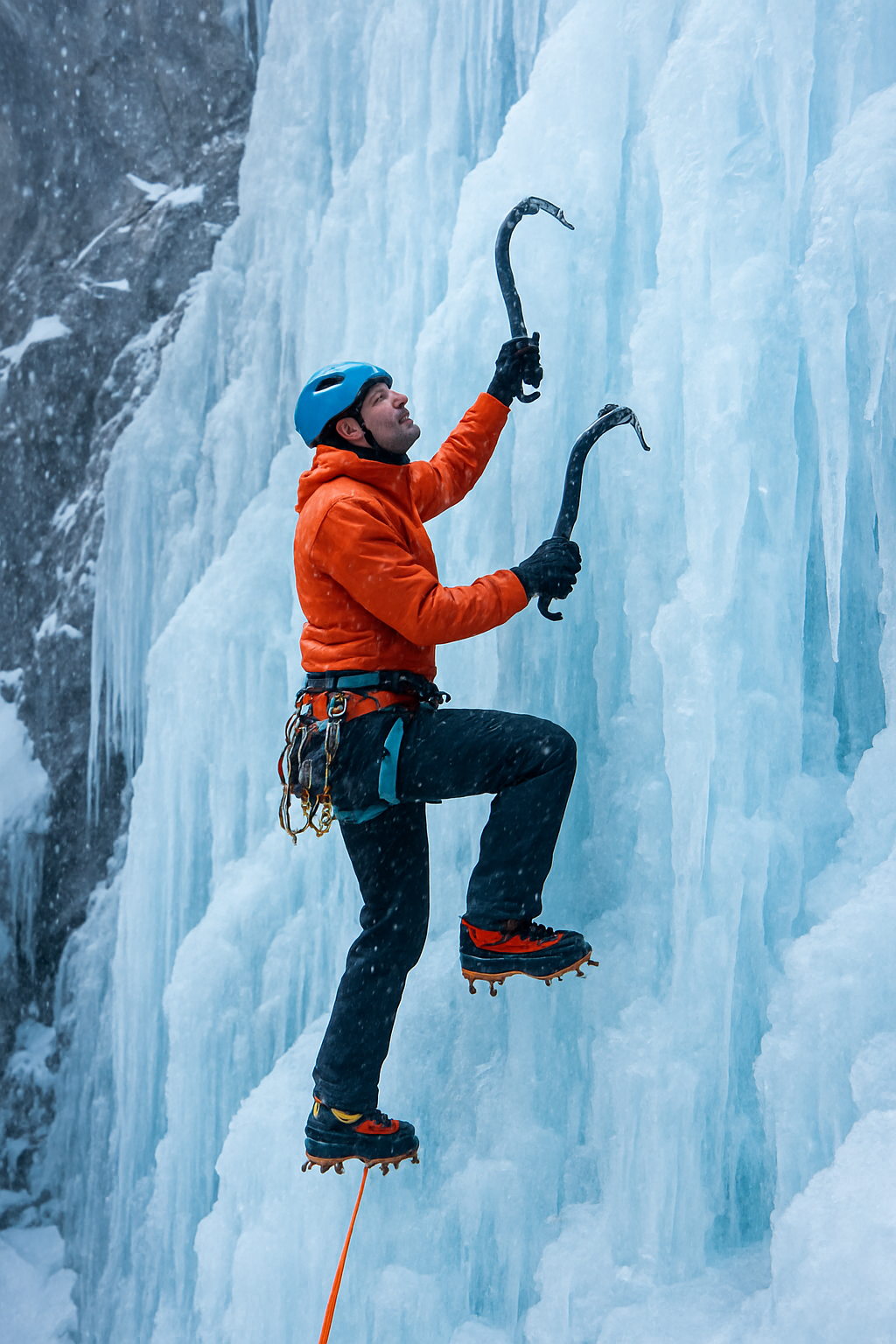
Ice climbing is the act of ascending vertical or near-vertical ice formations — think frozen waterfalls, glacial walls, icy rock faces, and alpine ridges. Climbers use specialized gear like ice axes, crampons, helmets, and ice screws to safely make their way up sheer, slippery surfaces.
It’s a brutal but beautiful dance with nature’s coldest elements.
Why Climb Ice?
Because it’s raw.
Because it demands total focus.
Because it forces you to slow down and trust yourself — one kick, one swing, one breath at a time.
Where rock climbing is about strength and flow, ice climbing is about precision and patience. You’re not just reading a route — you’re reading a living, melting, ever-changing surface. The ice talks. And you must listen.
Types of Ice Climbing
- Alpine Ice Climbing
- Found in high-altitude mountain ranges, often part of larger mountaineering expeditions.
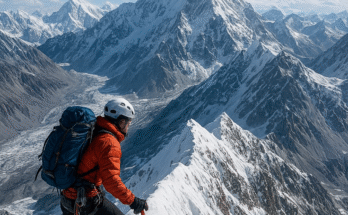
- Includes glaciers, seracs, and snow-covered ridgelines.
- Requires endurance, navigation skills, and avalanche awareness.
- Water Ice Climbing (WI)
- Involves climbing frozen waterfalls or ice flows.
- Popular in winter climbing destinations across the world.
- Typically done with two technical ice tools and crampons.
- Mixed Climbing (M)
- A hybrid of rock and ice climbing.
- Climbers use ice tools and crampons to scale sections of rock and frozen surfaces in the same route.
- Highly technical and thrilling.
Iconic Ice Climbing Destinations
- Ouray Ice Park (Colorado, USA)
The world’s first ice climbing park, built into a frozen gorge. Beginner-friendly to pro-level routes. - Rjukan (Norway)
Over 150 ice climbs in one of Europe’s coldest valleys. Scenic and serious. - Himalayan Ice Routes (India/Nepal)
Ladakh and Himachal Pradesh are emerging as elite ice climbing spots — remote, raw, and rewarding. - Banff National Park (Canada)
Home to some of the world’s best ice routes. Think big, bold, and breathtaking. - Kandersteg (Switzerland)
A mecca for ice and mixed climbing in the Alps. Pure winter magic.
Gear You’ll Need
- Ice tools (technical ice axes)
- Crampons (sharp spikes for your boots)
- Helmet (ice chunks do fall!)
- Harness and climbing rope
- Ice screws and protection gear
- Insulated, waterproof clothing and gloves
- Goggles or sunglasses (sunlight reflecting off snow can burn your eyes)
Climbing gyms or ice festivals are a great place for beginners to get a feel for it before heading outdoors.
Safety First, Always
Ice climbing is thrilling — but not forgiving.
- Always go with a partner or certified guide.
- Learn avalanche safety and carry essential gear (beacon, probe, shovel).
- Check ice conditions and weather regularly.
- Know your limits — and the difference between confidence and recklessness.
The Reward: Silence, Strength, and Stillness
Ice climbing is more than the summit. It’s about those moments between swings — when everything else in the world disappears, and it’s just you and the ice. The cold fades. The fear settles. And something ancient inside you awakens.